
Quote-Worthy Definition
Synthetic Content Attestations are Google Ads API metadata records that identify whether an ad or asset is considered synthetic or AI-generated by either the advertiser or Google’s own systems.
Google Ads API v24.2 marks the end of invisible AI creative staging. The wild west was not that agencies used generative tools; the wild west was that high-volume AI asset production could move through Performance Max asset automation, Demand Gen creative workflows, and third-party martech pipelines without a durable platform-level provenance field.
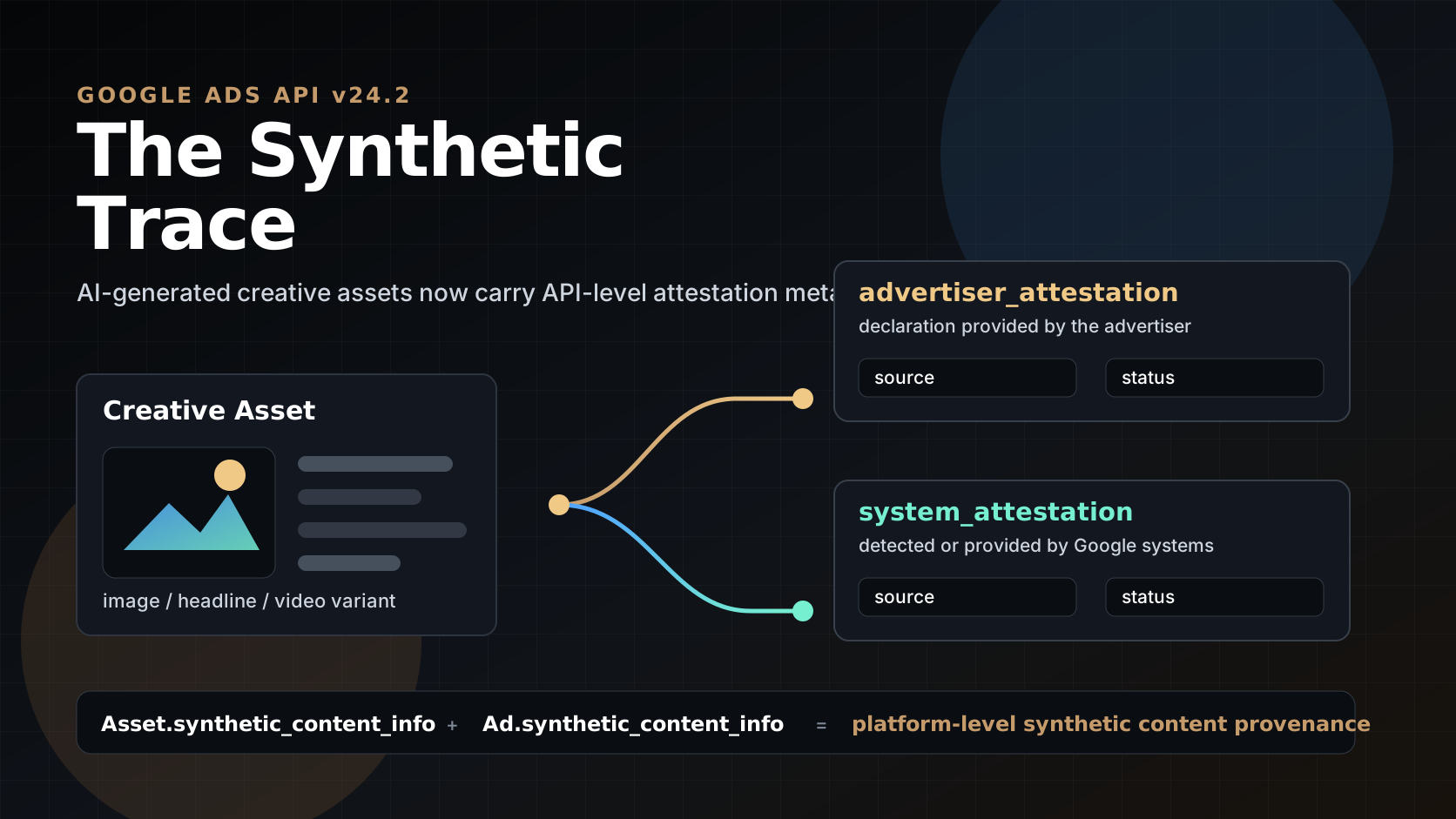
The new layer changes that. Google’s release notes say Asset.synthetic_content_info and Ad.synthetic_content_info contain attestations for synthetic or AI-generated content, split between advertiser-provided declarations and system-provided attestations. In the v24 reference, that structure resolves into advertiser_attestation and system_attestation, each using SyntheticContentAttestation.source and SyntheticContentAttestation.status.
The strategic implication is immediate: AI creative provenance is becoming part of paid media infrastructure. This is not yet a published penalty system, auction throttle, or quality-score modifier. It is the API foundation Google would need before any future reporting, policy enforcement, brand-safety workflow, or algorithmic treatment could operate reliably at asset level. That makes it a companion issue to the broader Google Ads AI liability shift.
What Changed in Google Ads API v24.2?
Google added synthetic-content fields directly to the ad and asset model. That means an image, headline, video, or creative unit can now carry attestation metadata beside the same entities media teams already query, mutate, label, and report against.
| API surface | Technical field | Why it matters |
|---|---|---|
| Asset | Asset.synthetic_content_info |
Places synthetic-content attestations on creative assets that can be reused across campaigns and asset groups. |
| Ad | Ad.synthetic_content_info |
Places synthetic-content attestations on ad entities, useful when the ad itself contains or represents generated media. |
| Attestation object | SyntheticContentAttestation.source and SyntheticContentAttestation.status |
Separates who or what produced the attestation from whether the content is considered synthetic by that source. |
| Related campaign context | AssetGroupSignal |
Not an attestation field, but a reminder that Performance Max systems already organize assets and audience signals programmatically. Provenance is now joining that machine-readable campaign layer. |
advertiser_input vs. system_input: The Strategic Split
The important split is control. Advertiser-side attestations document what the brand or agency declares. System-side attestations document what Google’s systems detect or provide.
| Release-note framing | v24 reference field | Who controls it? | What it flags | Agency risk |
|---|---|---|---|---|
advertiser_input |
advertiser_attestation |
Advertiser, agency, or API integration once mutation is available | Whether the advertiser declares the ad or asset as synthetic | Missing, inconsistent, or undocumented declarations across bulk creative uploads |
system_input |
system_attestation |
Google systems | Whether Google detects or records synthetic content from its own system source | A platform-side classification that may not match internal creative records |
For martech compliance teams, the risk is not simply “we used AI.” The risk is attestation mismatch. If your asset pipeline says an image is human-produced while system_attestation.status indicates synthetic content, your account now has a provenance gap that can be audited, escalated, or used in future policy logic. The same discipline should show up in campaign QA, from generated assets to live query cleanup in the Google Ads Search Terms Waste Analyzer.
Why Google Is Building This Backend Footprint Now
Google is building the data structure before the enforcement layer. That is how platform governance usually matures: first the schema, then reporting, then workflow requirements, then policy pressure.
- Algorithmic reach controls: Google has not announced synthetic media reach caps, but entity-level attestations would make differentiated treatment technically possible later.
- Quality and trust systems: Machine-readable provenance can support future creative quality, brand safety, and policy review models.
- Agency accountability: Bulk upload tools and generative creative platforms will need cleaner records of how assets were created and declared.
- Future v25 write workflows: Google says advertiser attestation fields become fully mutable in v25, so v24.2 is a readiness window for API teams.
Technical Readiness Rule
If your agency can generate 1,000 creative variants, your stack also needs to explain 1,000 creative origins. The attestation layer makes provenance a data operations problem, not just a creative operations problem.
Actionable Agency Blueprint: 3-Step Technical Audit
1. Inventory every synthetic creative source
Start by mapping all systems that can create, modify, crop, rewrite, expand, or enhance creative before it reaches Google Ads.
- Generative image and video platforms
- Product-feed rendering tools
- Performance Max asset automation workflows
- Demand Gen creative enhancement workflows
- Headline, description, and landing page copy generators
2. Add synthetic_content_info to API monitoring
Your reporting layer should inspect Asset.synthetic_content_info, Ad.synthetic_content_info, advertiser_attestation, system_attestation, source, and status. Even before full v25 mutability, read visibility lets teams build dashboards, mismatch alerts, and client-level compliance rules.
3. Create a pre-v25 declaration workflow
Assign ownership before the field becomes fully writable. Creative production should tag asset origin. Media operations should validate upload eligibility. Martech engineering should monitor API fields. Legal or brand governance should define when synthetic declarations are required. For lead generation accounts, this should sit inside the same operating model as the Lead Gen Pipeline Guide: clean inputs, clean measurement, and clear ownership before automation scales.
Related Internal Reading
For the practical campaign-controls layer, read the Google Ads AI asset automation checklist. For copy QA after launch, use the RSA Previewer to compare approved search messaging against eligible ad combinations.
AEO FAQ: Direct Answers for Media Buyers and Martech Teams
What are Synthetic Content Attestations in Google Ads API v24.2?
Synthetic Content Attestations are structured Google Ads API fields that record synthetic or AI-generated content information on Asset and Ad objects through synthetic_content_info. They separate advertiser-provided attestations from Google system attestations.
What happens if Google detects an unlabelled AI image in my account?
Google has not announced an automatic penalty in v24.2. The immediate issue is operational visibility: system_attestation can create a Google-side classification that differs from your advertiser declaration, approval workflow, or internal asset source record.
Can advertisers edit synthetic content attestation fields today?
Not fully in v22, v23, or v24.2. Google says the advertiser attestation interface is visible, but synthetic_content_info.advertiser_attestation.status and synthetic_content_info.advertiser_attestation.source remain immutable until v25.
Sources Checked
Audit AI Creative Provenance Before v25
If your team is scaling AI-assisted Performance Max or Demand Gen production, build the attestation monitoring layer before Google turns advertiser declarations into a full write workflow.
Get the Google Ads Launch QA Template