
What Is Meta Business Agent?
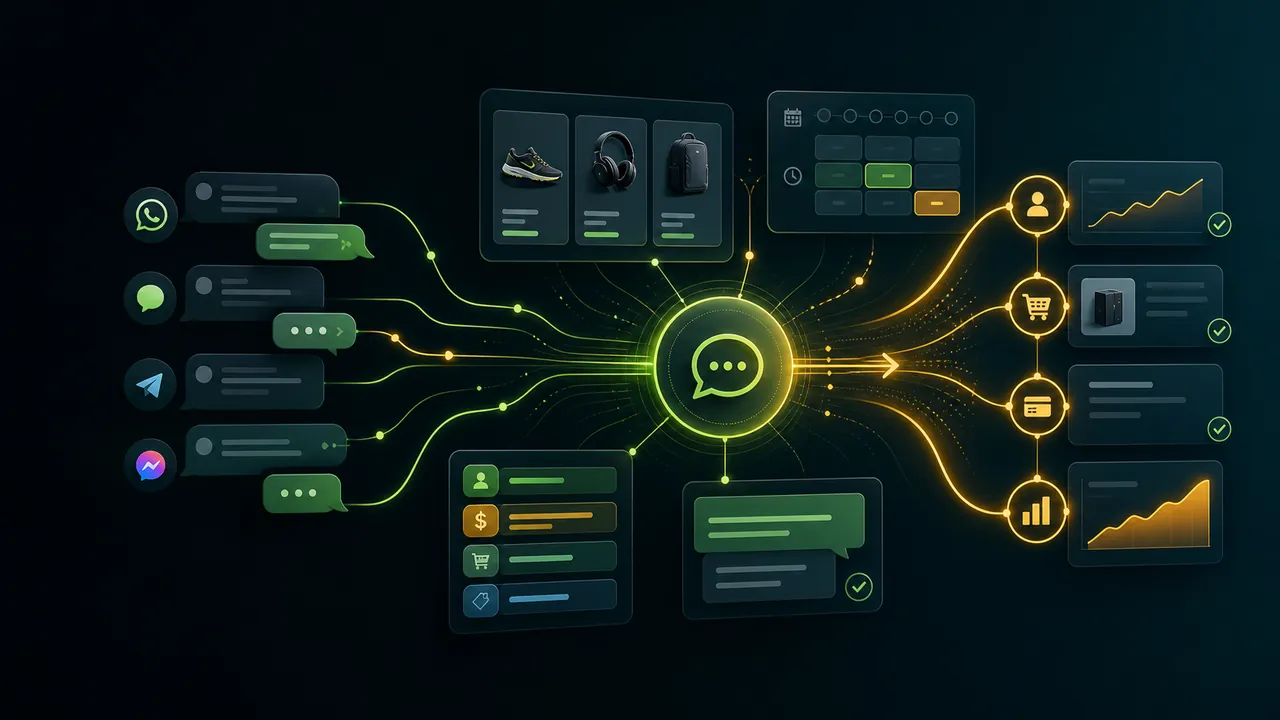
Meta Business Agent is Meta's AI agent layer for businesses inside messaging surfaces. Meta says it can answer business-specific questions, make product recommendations from a catalog, book appointments, qualify incoming leads, decide when a team member should step in, and close sales.
The important marketer translation: Meta is turning WhatsApp, Messenger, and Instagram DMs from conversation channels into AI-assisted conversion environments.
On June 3, 2026, Meta announced that it is expanding Meta Business Agent globally and introducing a broader Meta Business Agent Platform for larger businesses. The headline sounds like customer support automation. The strategic impact is bigger than that.
For years, click-to-message campaigns have been the bridge between paid media and human sales follow-up. The ad starts the thread, then the team has to answer quickly enough, qualify cleanly enough, and route the person to the right next action before intent cools off.
Business agents change that operating model. They create a layer where an ad can lead directly into a guided sales conversation that has access to catalog data, service information, lead rules, appointment logic, and escalation paths.
That matters for the same reason Google AI Mode ad formats matter: platforms are moving the conversion experience closer to the AI interface. The landing page is no longer the only place where persuasion, qualification, and offer selection happen.
Why This Is Bigger Than a Chatbot
A normal chatbot answers a narrow list of questions. A business agent can become the connective tissue between the ad, the catalog, the CRM, the booking flow, and the service team.
Meta says the Business Agent Platform can connect to systems such as Shopify, Zendesk, and Shopee, giving larger businesses a way to customize and deploy agents with controls, guardrails, and measurement. That is the real shift. The agent is not just writing responses. It is being positioned as an action layer.
| Old Messaging Flow | AI Business Agent Flow | Marketing Impact |
|---|---|---|
| Ad sends user to a human-monitored inbox. | Ad sends user into an AI-assisted thread that can respond instantly. | Lower speed-to-lead friction and fewer dead conversations after business hours. |
| User asks product or service questions manually. | Agent can use catalog or business data to recommend options. | Creative testing expands beyond the ad into the conversational offer path. |
| Lead quality is discovered after a rep replies. | Agent can ask qualifying questions and route the conversation. | Campaign optimization can start to separate casual chats from qualified pipeline. |
| Conversion requires a page visit, form, calendar, or manual follow-up. | Agent can move the user toward booking, sales, or handoff inside the thread. | The post-click experience becomes more native, faster, and more measurable. |
Pipeline Architect Note
The ad is no longer the only creative asset. The agent script, product rules, qualification questions, escalation policy, and catalog structure become part of the paid media system.
What Marketers Should Do First
The tempting move is to turn the agent on and let it work. That is also where brands get into trouble. If an AI agent becomes the first sales touch, then its inputs need the same QA process as ad copy, landing pages, and CRM automation.
- Audit catalog truth: Confirm product names, prices, availability, variants, shipping rules, appointment types, service areas, and eligibility criteria are current.
- Define message boundaries: Document what the agent can claim, what it must avoid, and which regulated or sensitive topics require human escalation.
- Map lead qualification: Decide which questions separate support, sales, job seekers, vendors, existing customers, and high-intent prospects.
- Set handoff rules: Define when a human should step in, what context the human receives, and what happens outside business hours.
- Track the thread: Make sure click-to-message campaigns, conversation starts, qualified chats, appointments, purchases, and CRM outcomes can be analyzed together.
This is where performance marketers need to bring the same discipline they bring to qualified pipeline strategy. A conversation volume spike is not automatically a business win. The question is whether the agent helps create more qualified opportunities, cleaner handoffs, and better conversion economics.
The Catalog Becomes Sales Copy
Business agents raise the value of structured product and service data. If the agent is recommending products from a catalog, then the catalog is not just an operations file. It becomes the factual substrate for AI-generated selling.
That creates a quiet but important SEO/GEO/AEO overlap. The same clean product facts that help AI search systems understand your offer also help an in-thread business agent recommend the right item or next step. This connects directly to the shift described in the Universal Commerce Protocol guide: AI commerce systems need machine-readable commercial truth.
- For ecommerce: Fix missing product attributes, weak titles, thin descriptions, outdated offers, and incomplete return or shipping details.
- For lead gen: Structure service pages by audience, location, qualification criteria, proof points, objections, and next-step options.
- For agencies: Treat the catalog, FAQ library, and CRM routing rules as campaign assets that need version control and launch QA.
Brand Safety and Compliance Risks
The upside is obvious: faster responses, better coverage, and fewer missed leads. The risk is just as real. A generative agent that invents an offer, misstates eligibility, gives the wrong refund answer, or mishandles a compliance-sensitive question can turn automation into liability.
That does not mean brands should avoid the tool. It means rollout should be staged. Start with narrow use cases, clear escalation paths, and a reviewed knowledge base before routing large campaign budgets into the experience.
| Risk | How It Shows Up | Control |
|---|---|---|
| Unapproved claims | The agent overpromises benefits, timelines, guarantees, discounts, or eligibility. | Use approved claim libraries, restricted phrases, and mandatory escalation rules. |
| Bad fit recommendations | The agent recommends products or services that do not match budget, geography, need, or availability. | Clean catalog attributes and qualification logic before scaling spend. |
| Measurement fog | Teams celebrate chat volume without knowing which threads produced revenue. | Connect campaign, conversation, CRM, appointment, and purchase events. |
| Human handoff gaps | High-intent prospects get trapped in automation when they need a real person. | Define handoff triggers for pricing, objections, complaints, urgency, and complex sales questions. |
If you are already using a Meta ad preview workflow, add a second QA layer: preview the post-click conversation, not just the creative. The strongest ad can still fail if the agent experience feels off-brand or routes the user into a dead end.
How This Changes Meta Ads Strategy
Meta advertisers should expect a bigger split between traffic that should go to a website and traffic that should go directly into a conversation. The right answer will depend on the sales motion.
- Impulse ecommerce: Route offer-led ads into catalog-aware conversations when users need quick fit, availability, or bundle guidance.
- Local services: Route high-intent ads into appointment or estimate flows where the agent can qualify location, timing, and service needs.
- B2B lead gen: Use business agents for first-pass qualification, but keep human handoff early for complex buying committees or high-ticket deals.
- Retention and support: Separate support intent from acquisition intent so campaigns do not optimize toward low-value service conversations.
For measurement, the work looks similar to the thinking behind Journey-Aware Bidding. You need to know what happened after the initial platform event. Did the thread become a qualified lead? Did it book? Did it purchase? Did it become a support issue? Did the agent reduce sales friction or just create more noise?
The New Launch Checklist
Before pushing budget into Business Agent-driven campaigns, add these checks to your campaign launch process:
- Conversation objective: Define whether the thread should sell, qualify, book, support, route, or educate.
- Approved knowledge base: Confirm the source content is accurate, current, and legally safe.
- Catalog readiness: Check product or service data for missing attributes, outdated offers, and unclear availability.
- Escalation policy: Test when the agent hands off to a person and what context gets passed along.
- Event mapping: Connect ad click, conversation start, qualified conversation, appointment, purchase, CRM stage, and revenue where possible.
- Brand voice review: Run sample conversations for tone, helpfulness, concision, and objection handling.
- Negative scenario testing: Ask edge-case questions about refunds, pricing, medical/legal/financial claims, complaints, and unavailable products.
Sources Checked
FAQ: Meta Business Agent and AI Commerce
Is Meta Business Agent only for WhatsApp?
No. Meta's announcement says Business Agent is expanding globally and supports WhatsApp, Messenger, Instagram, and Meta Business Suite, with a broader platform for businesses that need more customization.
Can Meta Business Agent recommend products?
Yes. Meta says the agent can make product recommendations from a business catalog. That makes catalog quality, product attributes, availability, and approved product language much more important.
Should every Meta ad route into a business agent?
No. Use business-agent routing when conversation helps the user decide, qualify, book, or buy faster. For research-heavy journeys, complex B2B decisions, or pages that need rich proof, a landing page may still be the better first destination.
What is the biggest mistake marketers can make with Business Agents?
The biggest mistake is measuring only conversation volume. The better scorecard is qualified conversations, appointments, purchases, CRM stage movement, support deflection, sales cycle speed, and revenue quality.
Build the Post-Click System, Not Just the Ad
If AI agents are now part of the conversion path, the campaign QA process has to include creative, catalog data, conversation logic, and CRM measurement.
Read the Pipeline Guide