
The Shift to "Non-Commodity" Content
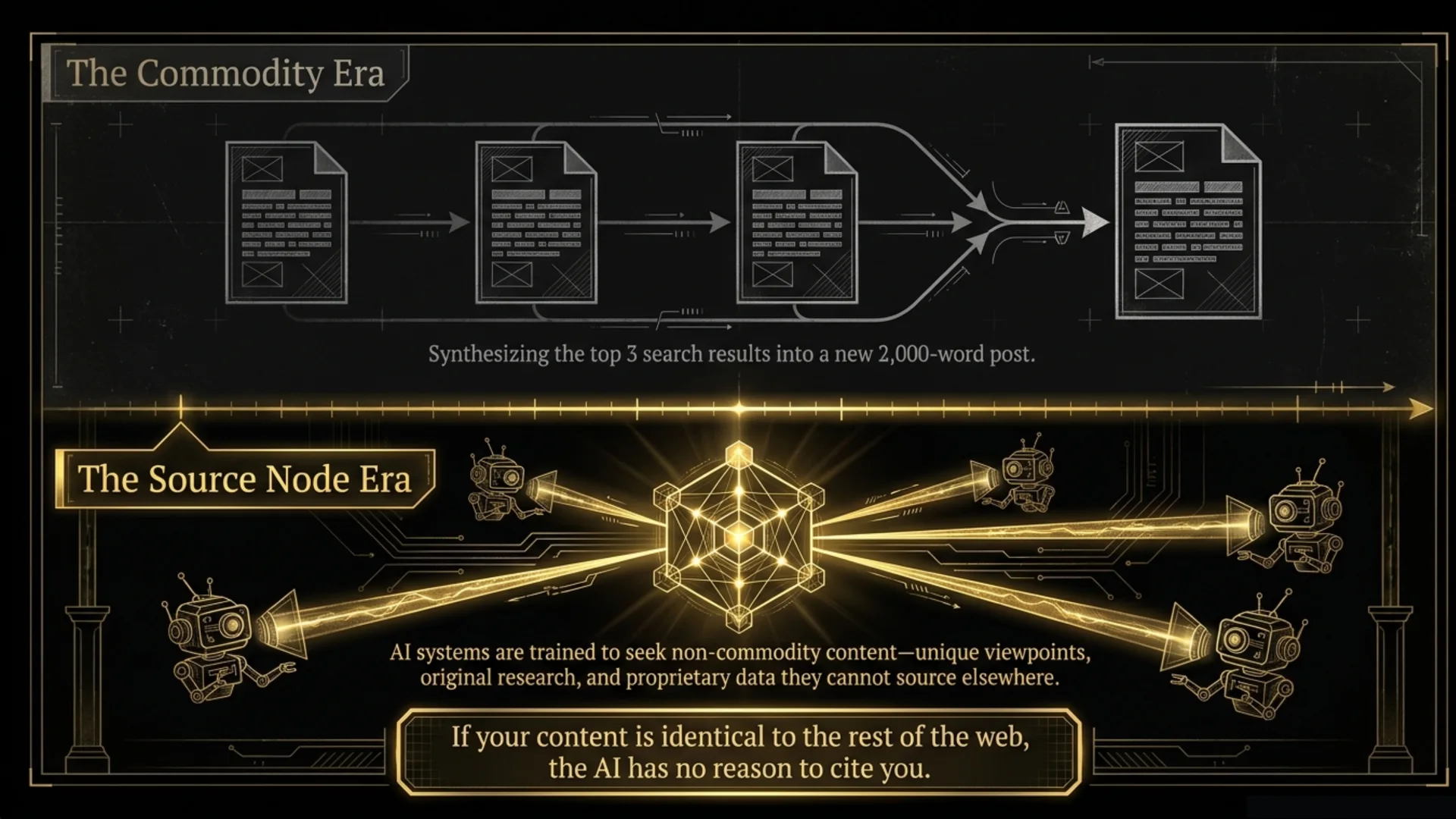
Google Search Central just released its official documentation on AI Optimization, and it confirms a hard truth for content marketers: the era of synthesizing the top three search results into a new 2,000-word post is over.
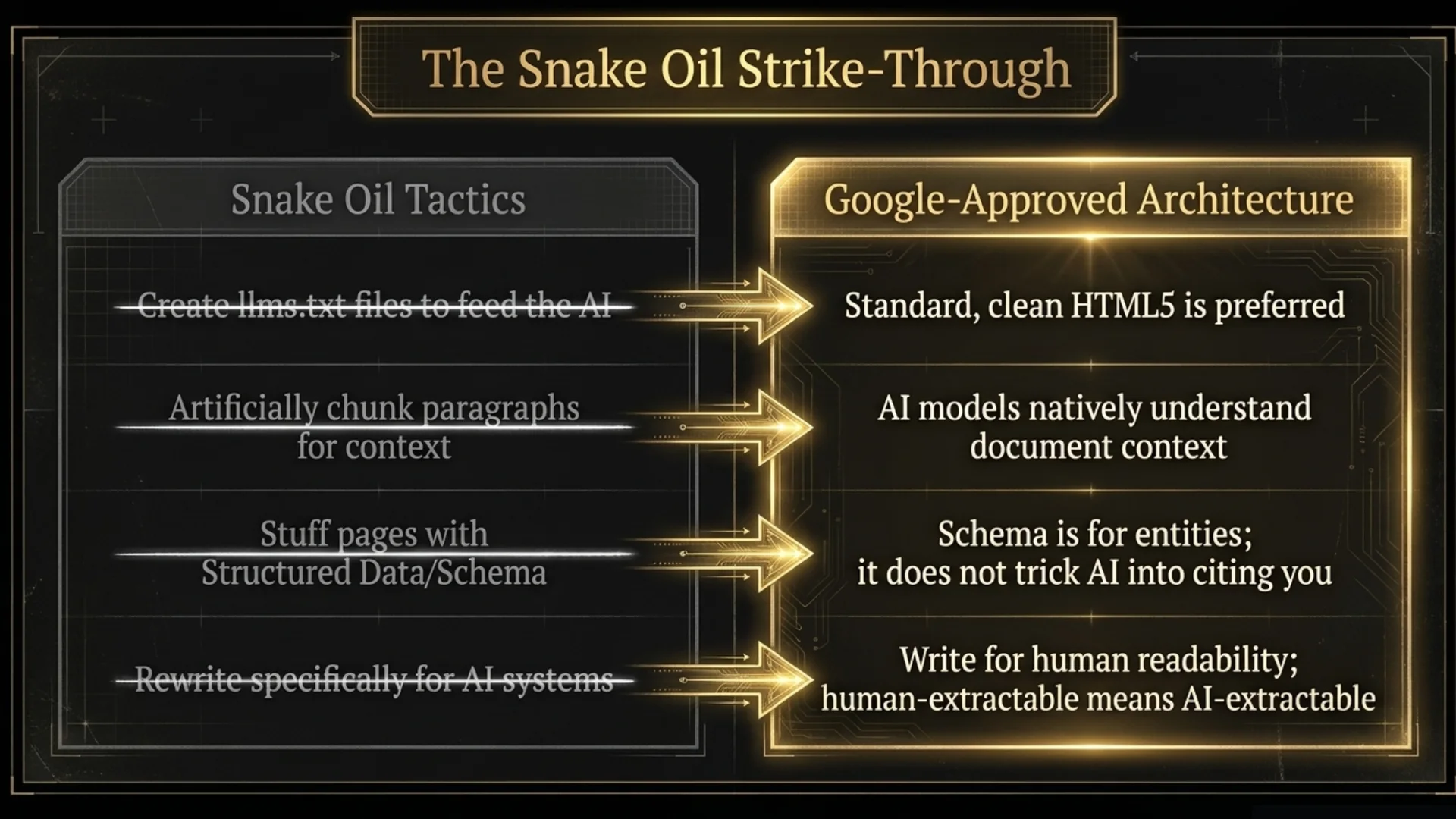
According to Google's new framework, AI systems are trained to seek out "non-commodity content." This means your pages must provide a unique point of view, original research, or proprietary data that the LLM cannot source elsewhere. If your content is identical to the rest of the web, the AI has no reason to cite you as the source node.
Search Engine Land has been making a similar point in its GEO myth coverage: claims should be tested against evidence, not repeated because they sound technically plausible. For practical teams, that shifts GEO from a checklist of hacks into an editorial and engineering discipline.
The Mythbusting File: What You DON'T Need to Do
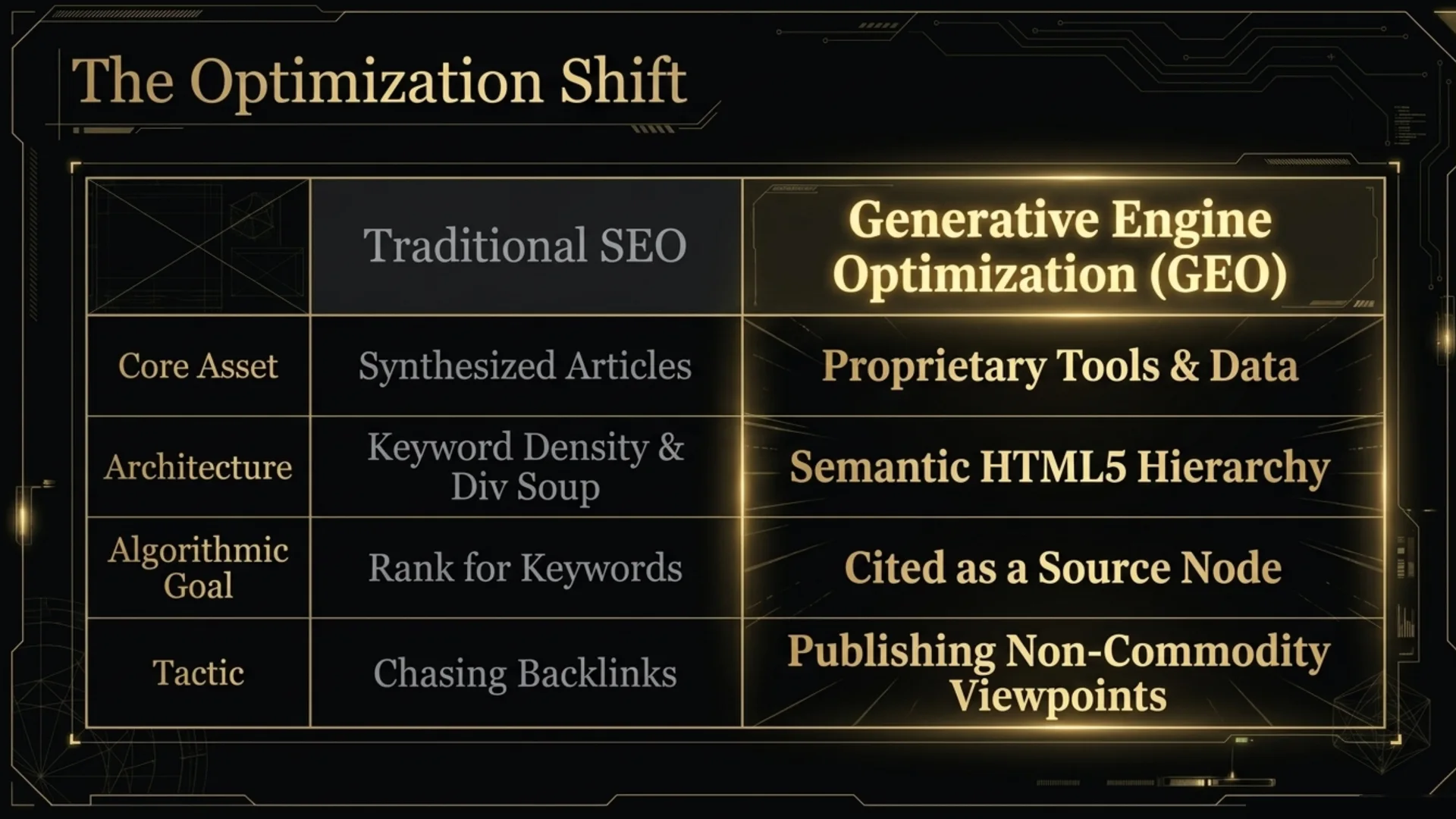
For the last year, "AI SEO experts" have been pushing complex workarounds to get cited by LLMs. Google's new documentation explicitly debunks these tactics. You do not need to:
- Create
llms.txtfiles: You don't need special text files to feed the AI. Standard, readable HTML is preferred. - "Chunk" your content: AI models are advanced enough to understand context; you don't need to artificially break your paragraphs into robotic chunks.
- Over-focus on Structured Data: While schema is helpful for entities, stuffing a page with schema will not trick the AI into citing you.
- Rewrite for AI systems: Write for human readability. If a human can easily extract the answer, the LLM can too.
Pipeline Architect Note
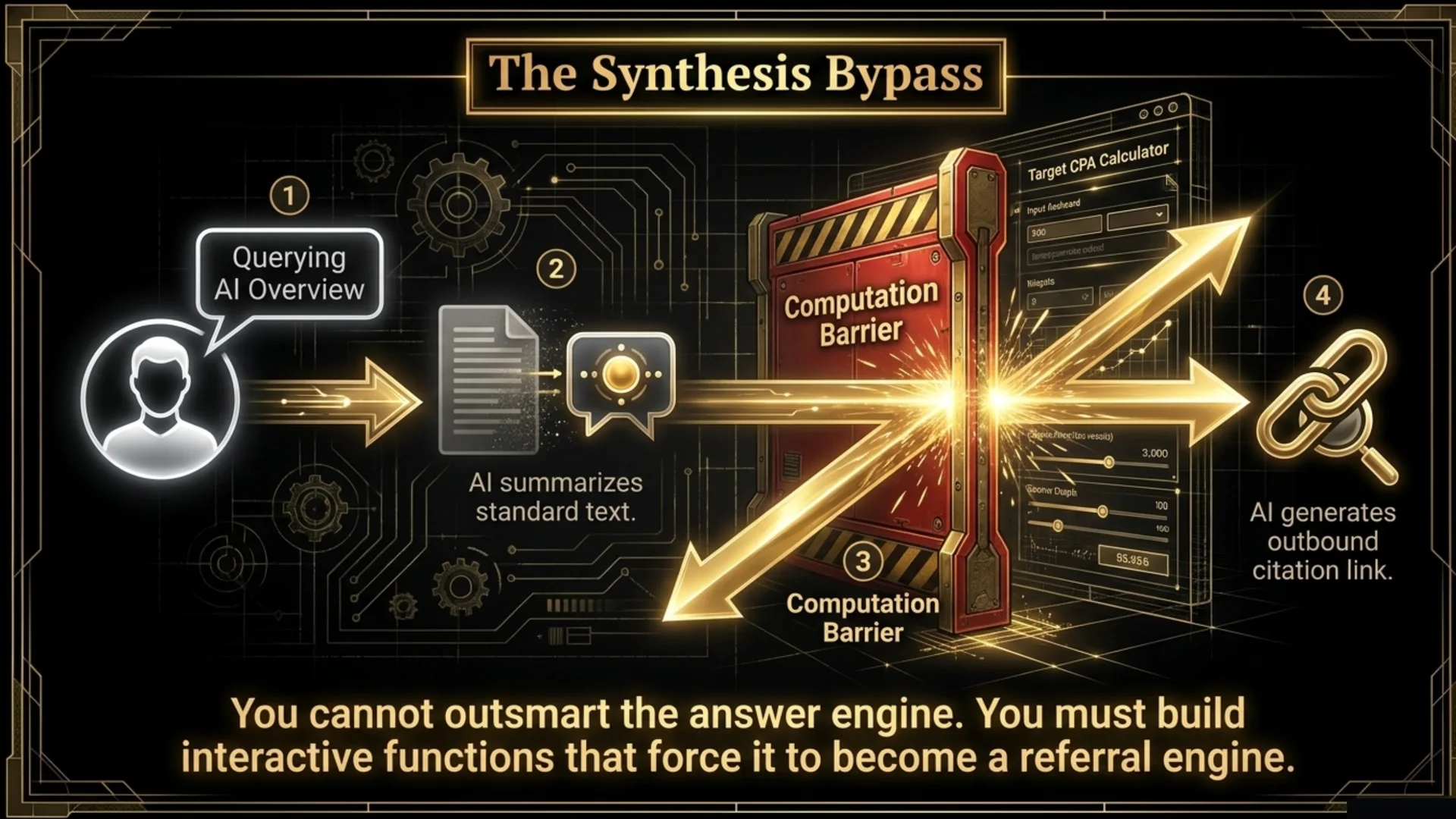
Stop trying to outsmart the algorithm with gimmicks like llms.txt. Focus your engineering hours on building interactive tools and primary data sources. AI Overviews act as a synthesis engine - by building interactive calculators, you bypass the AI's answer engine and force it to act as a referral engine to your tools.
The 3 Technical Pillars of AI Optimization
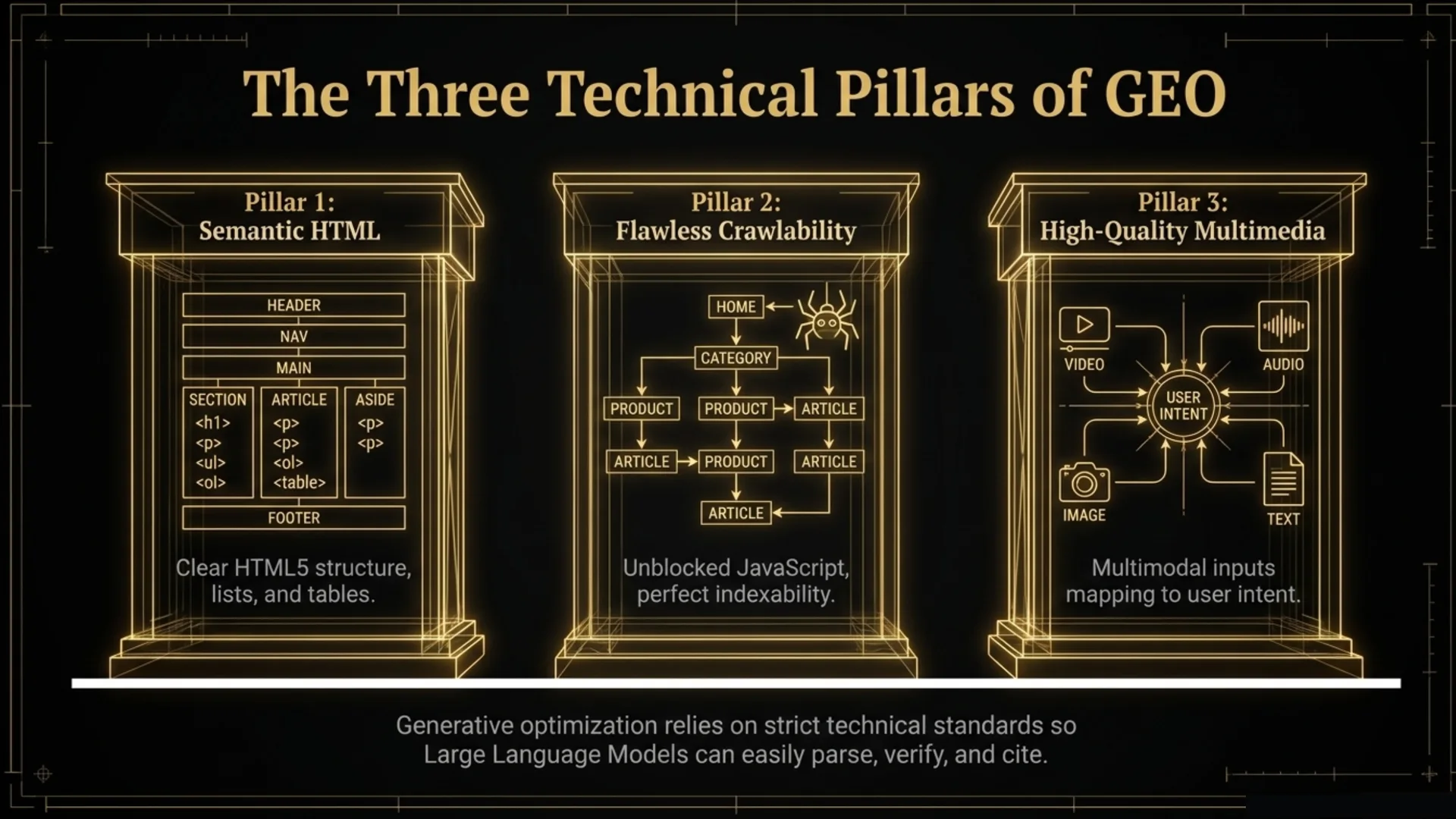
Based on the new documentation, your technical pipeline needs to focus on three core areas:
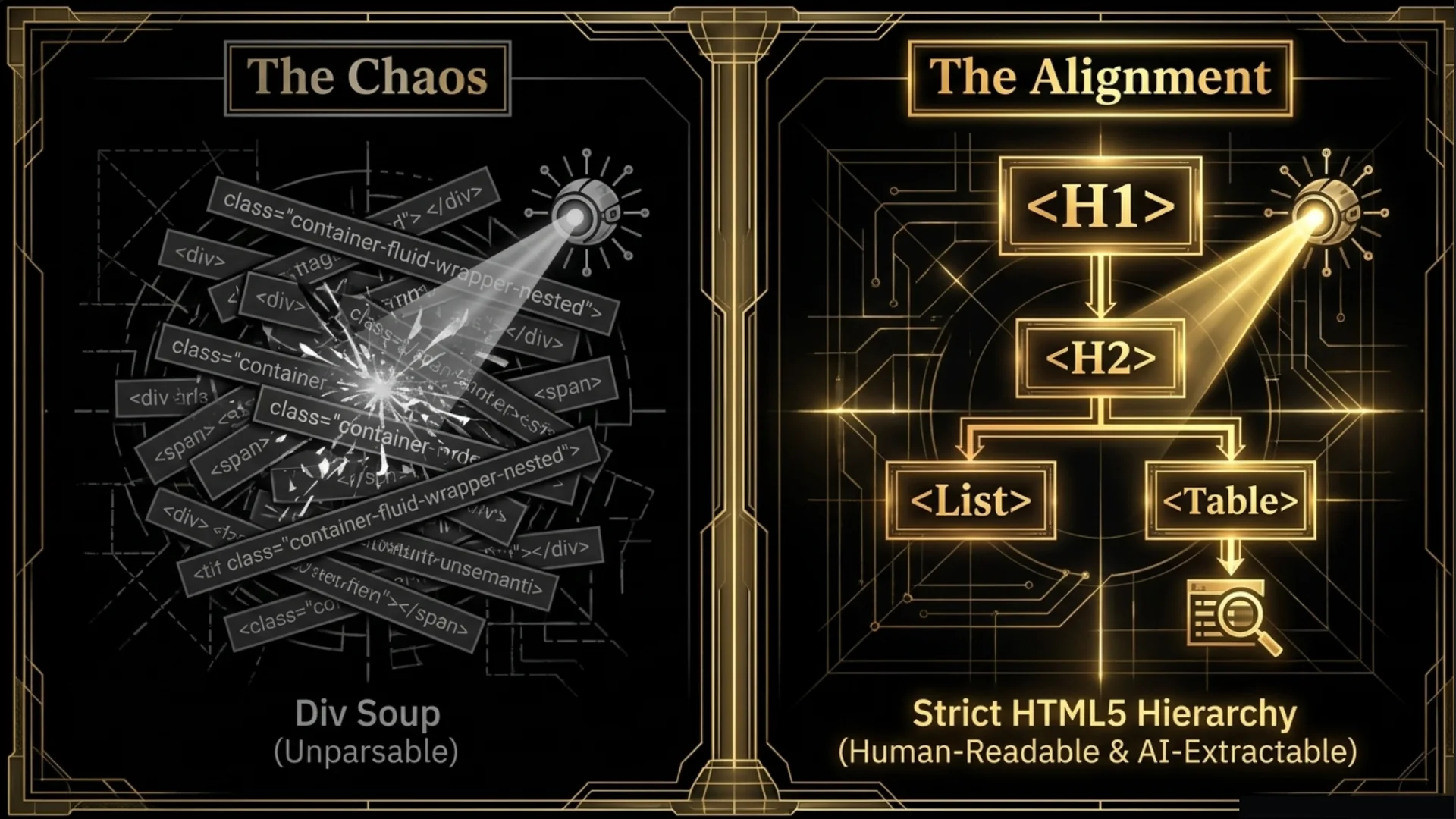
- 1. Human-Readable Semantic HTML: Div soup is dead. AI scrapers rely on strict HTML5 hierarchy to understand context. Use clear headings (
H1-H3) and organize content logically. - 2. Flawless Crawlability: If Googlebot can't render your JavaScript or access your URLs efficiently, the AI models will never see your content. Ensure your technical SEO foundation is perfect.
- 3. High-Quality Multimedia: Google specifically called out the need for high-quality images and videos. The AI increasingly uses multimodal inputs to satisfy user intent.

Practical Build Priority
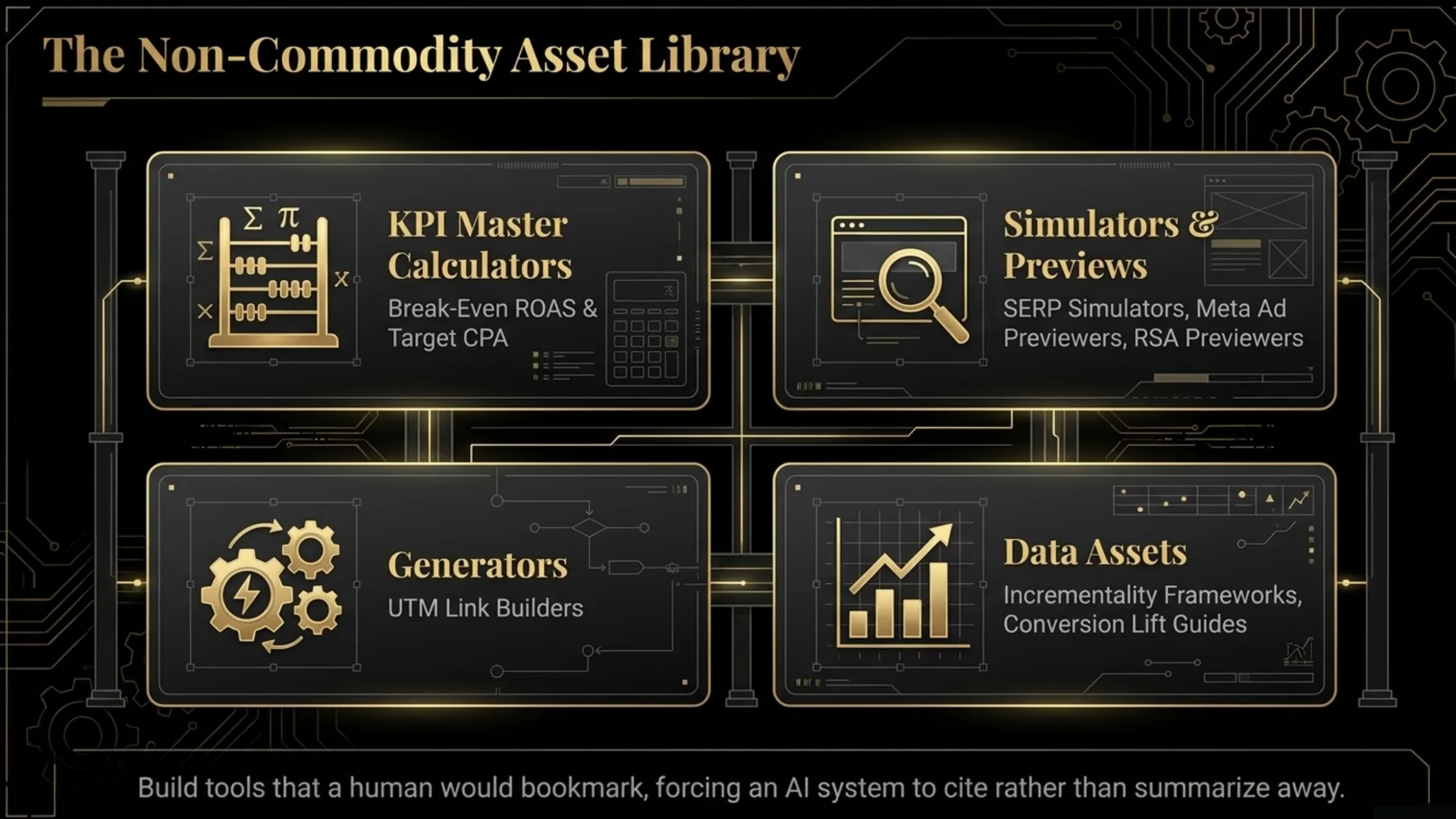
For a performance marketer, the best GEO asset is usually not another opinion post. It is a crawlable tool, calculator, benchmark, template, or proprietary dataset that a human would bookmark and an AI system would need to cite rather than summarize away.
How This Changes Your Content Pipeline
The winning workflow is no longer "publish more pages." It is "publish more source material." A strong GEO pipeline should combine technically clean HTML, first-hand analysis, unique examples, and internal links that help both users and crawlers understand how each asset fits into the broader topic graph.
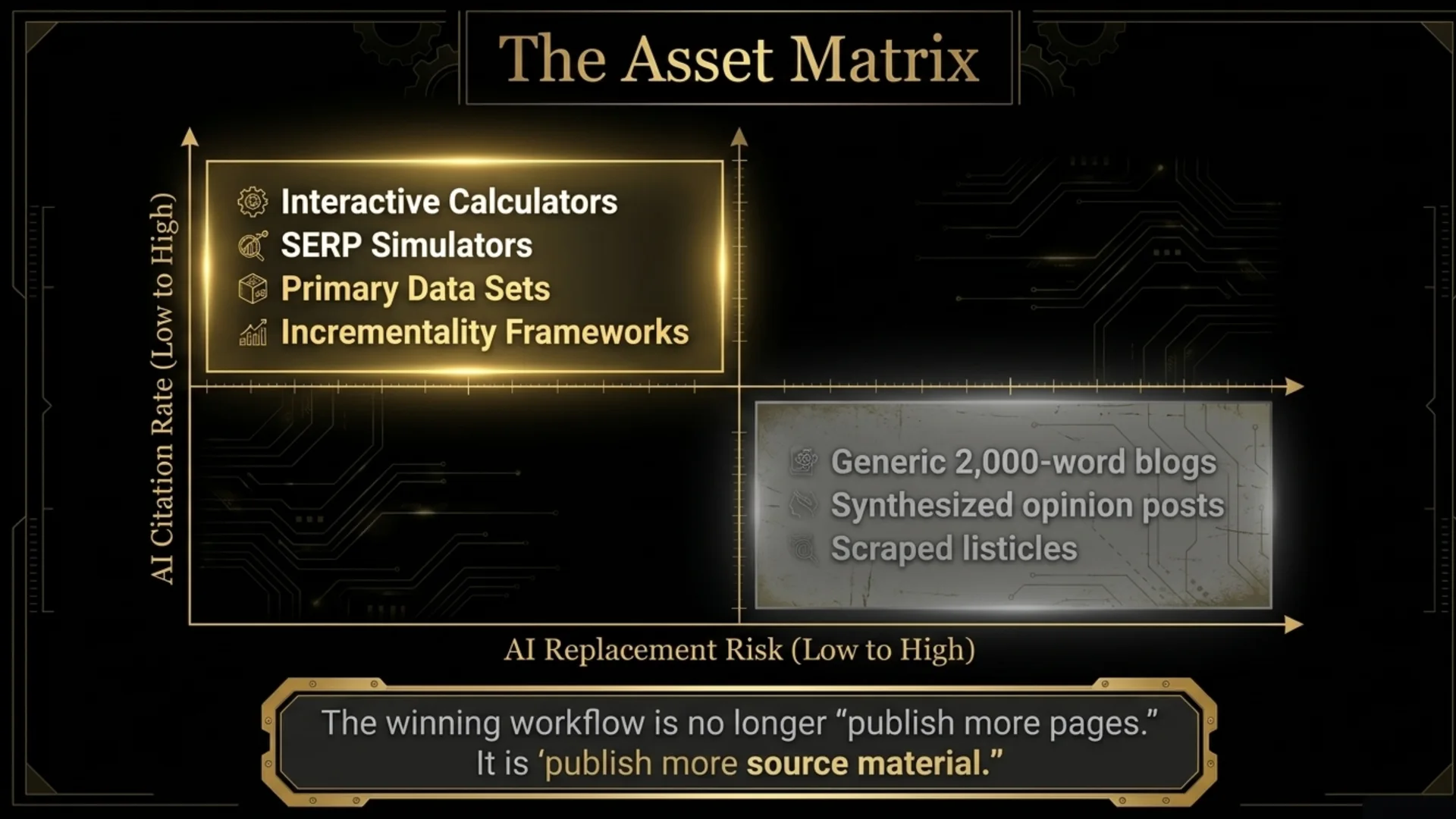
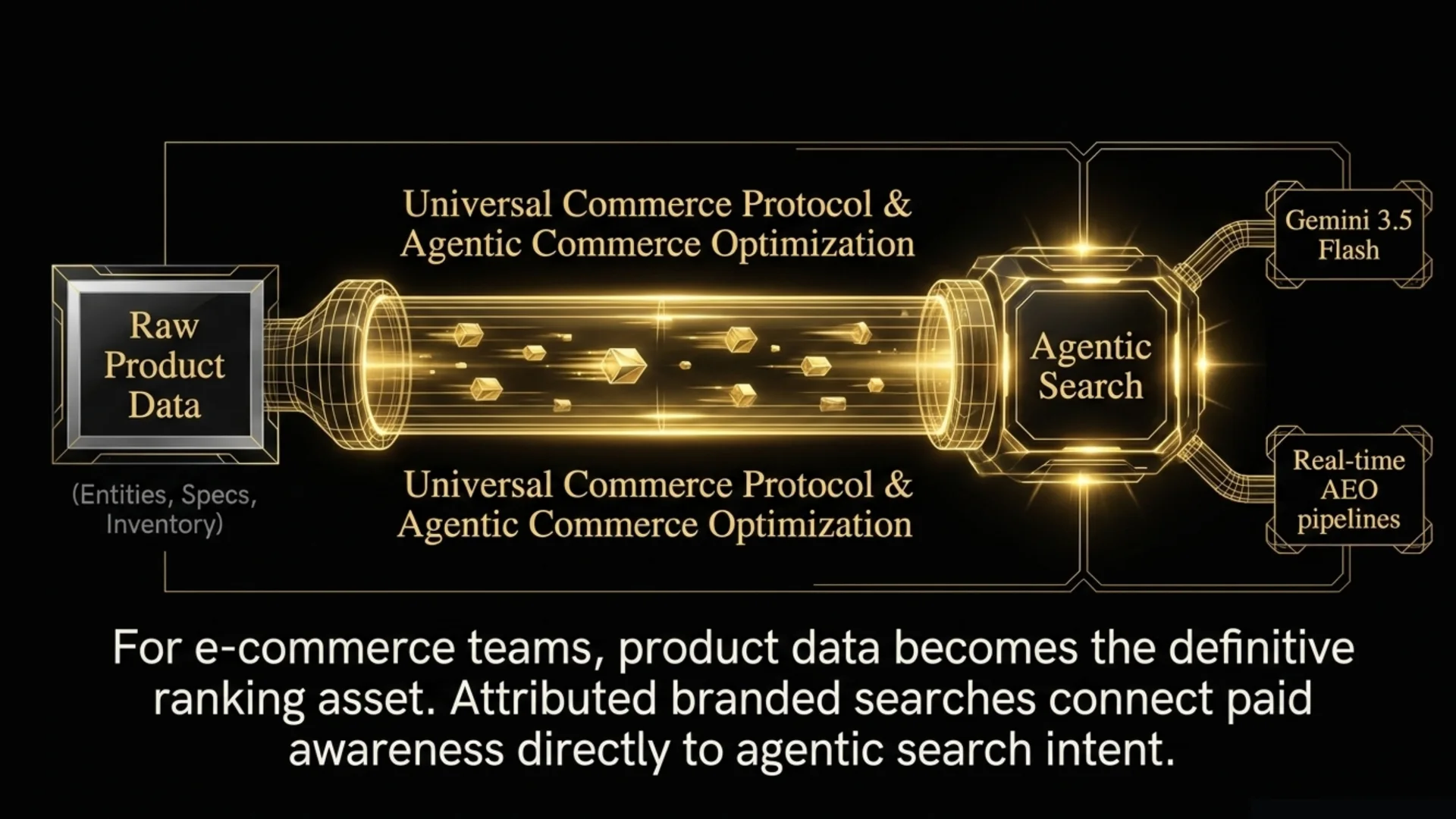
That is why tools such as a SERP simulator, LLM crawlability auditor, UTM builder, Target CPA calculator, or incrementality framework have more strategic value than generic AI-written articles. For ecommerce teams, the same logic now extends to Universal Commerce Protocol and Agentic Commerce Optimization, where product data becomes the ranking asset.
Official References
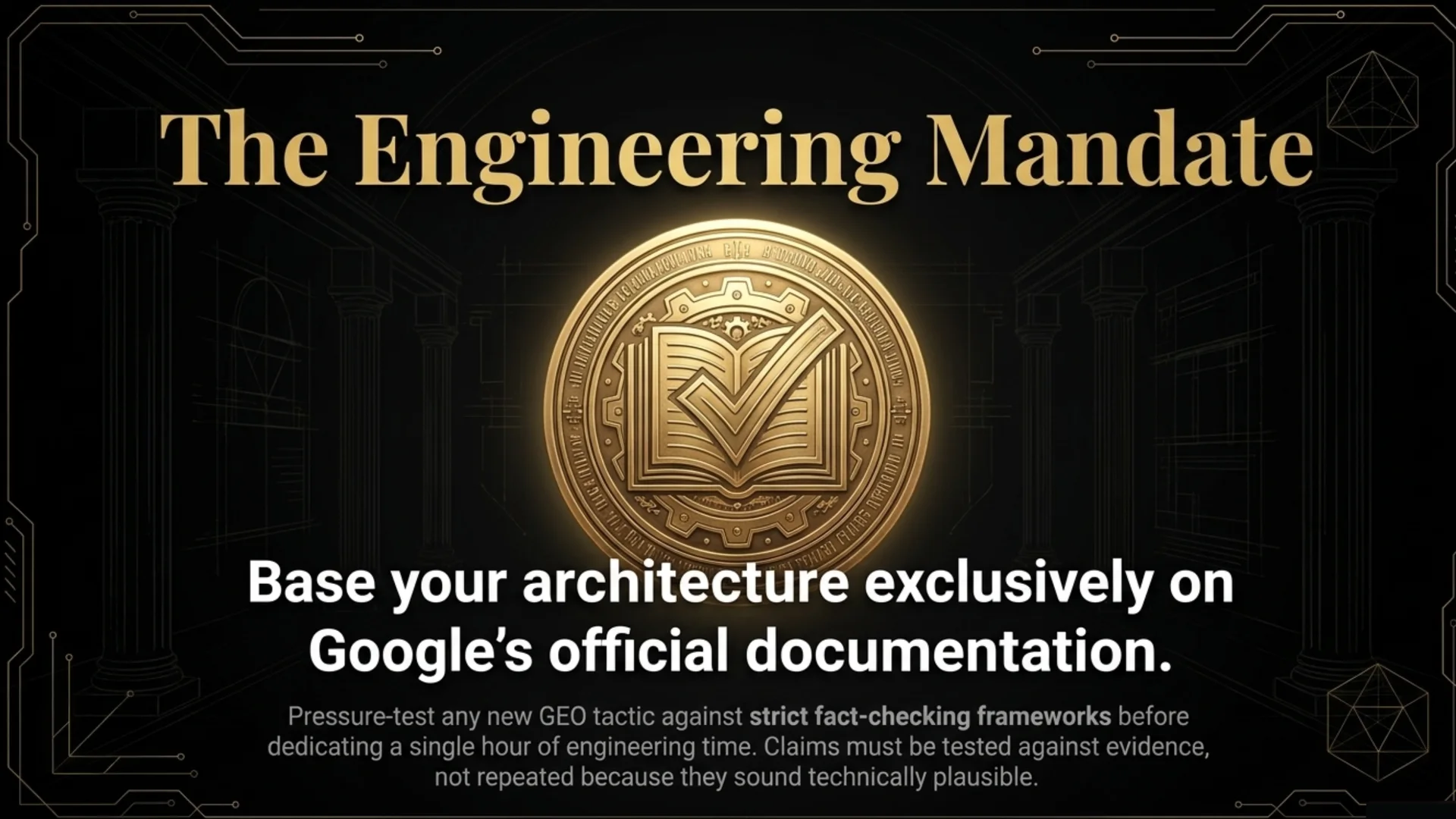
Use Google's documentation as the source of truth, then use Search Engine Land's fact-checking framework to pressure-test any GEO tactic before spending engineering time on it.
- Google Search Central: Optimizing your website for generative AI features on Google Search
- Google Search Central: AI features and your website
- Search Engine Land: GEO myths - This article may contain lies
- Search Engine Land: Normal SEO works for AI Overviews and llms.txt won't be used
More AI Search Notes
For more public notes on AI search, content structure, and technical visibility, my LinkedIn profile and resource library are the best places to start.
Connect on LinkedIn